

Bankruptcy or Consumer Proposal: Can you lose your house in Quebec?
When facing financial difficulties, one fear almost always returns for homeowners: losing their house. This worry pushes many people to postpone consulting with a Licensed Insolvency Trustee, sometimes to the detriment of their financial situation.
However, in Quebec, bankruptcy and a consumer proposal do not have the same impacts on a property.
In many cases, it is even possible to keep your house. Everything depends on the type of debts, the mortgage and, above all, the equity available on the house.
This article clearly explains what you need to know to make an informed decision.What is the difference between secured and unsecured debts?
Before understanding what happens to your house in the event of a consumer proposal or bankruptcy, you must distinguish between two main categories of debts:
- Secured debts
These are debts secured by assets: car loans, mortgages, home equity lines of credit, and secured credit cards.
An asset is a possession that has value, such as a house, a car, or a security deposit (anything that can be used to repay your debts).
In the case of a mortgage, the house itself constitutes the asset and serves as collateral to the lender in the event of a prolonged payment default.
Therefore, if you don’t pay after several months, the creditor can exercise a remedy (e.g., seizure of the property or sale) to recover their losses.
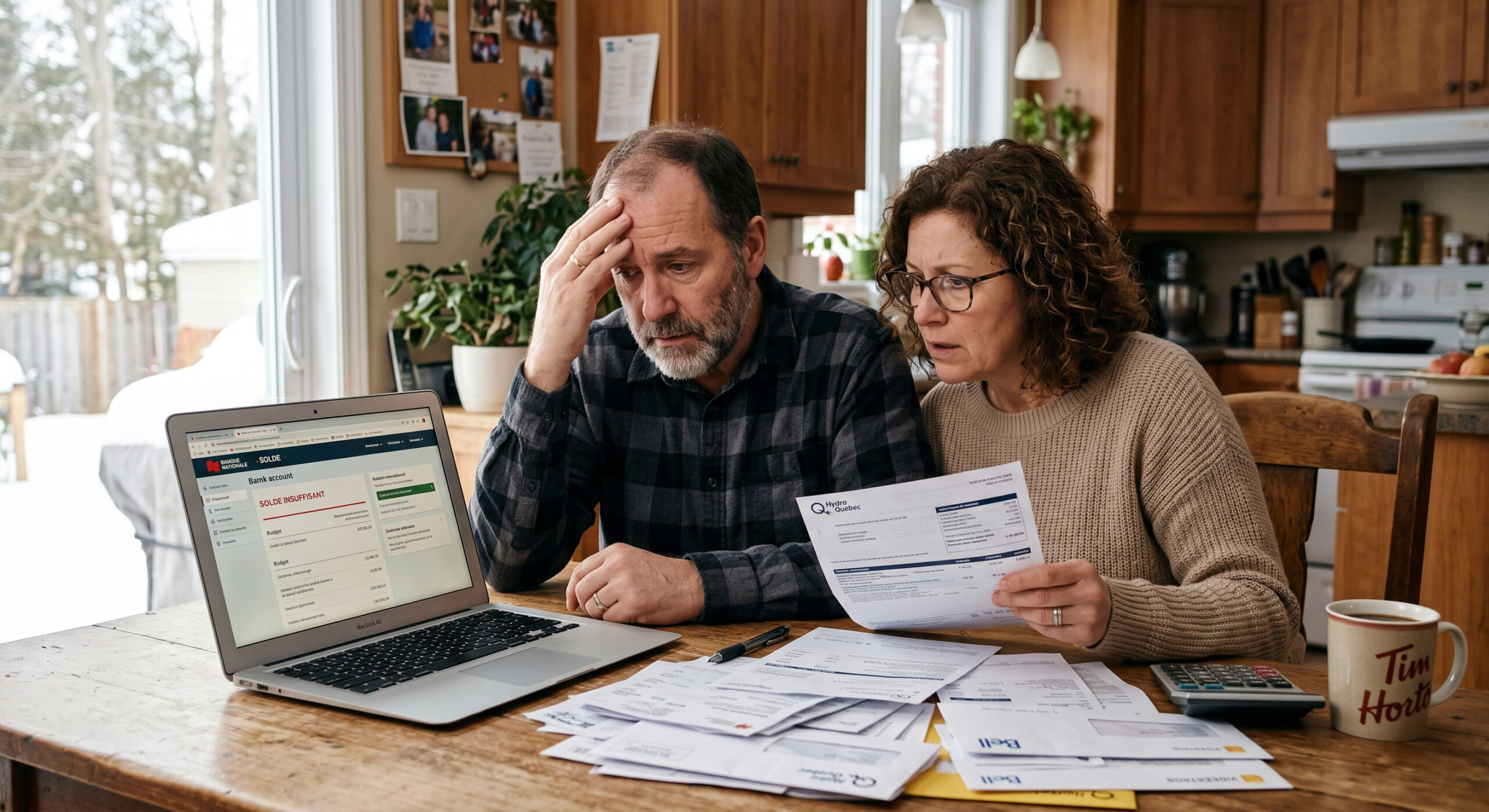
Important: bankruptcy or a proposal does not erase the mortgage if you wish to keep the house.
- Unsecured debts
These are debts that are not secured by assets, so without specific guarantee for the lenders:
- credit cards
- lines of credit
- personal loans
- utility bills
- tax debts (in most cases)
If you fail to meet your obligations, creditors cannot take your assets to repay themselves.
They can initiate legal proceedings or exercise their right of set-off (take money from your bank account to recover what you owe them).
These debts can be erased by bankruptcy or reduced by a consumer proposal. The lawsuits and collection procedures then cease immediately.
It is this distinction between secured and unsecured debts that explains why you can often keep your house while settling your debts.
Can you keep your house with a consumer proposal?
The consumer proposal is generally the most flexible solution for homeowners.
How does it work?
You propose to repay a portion of your unsecured debts, based on your financial capacity, over a maximum period of 5 years, without interest.
During this time:
- you keep all your assets, including your house
- you continue to pay your mortgage normally
The key concept: equity
Equity corresponds to the difference between the market value of your house and the balance of your mortgage.
For example:
- house: $300,000
- mortgage: $220,000
- equity: $80,000
An individual who owns a house fully paid off or with high equity could:
- see their proposal refused by creditors
- or have to make a higher proposal (larger monthly payments) than if there were no such equity
Why? Because creditors always compare the proposal to what they could receive in the event of bankruptcy. If the equity is high, they might demand more.
In summary: yes, you can keep your house with a consumer proposal, but strong equity can influence the cost of the proposal.
Creditors generally evaluate the proposal by comparing it to what they could recover in a bankruptcy, taking into account administration costs (Trustee fees they must pay, etc.) and realization costs (real estate broker fees, etc.).

What happens to a house in the event of bankruptcy?
Bankruptcy works differently because it involves a transfer of your assets to the Trustee, potentially including your house.The role of the Trustee
The Trustee analyzes the value of your house and determines if there is equity available to repay your creditors.
Two possible scenarios
1. Little or no equity
If the value of your house is similar (or less than) your mortgage:
- there is no interest for creditors to seize your house
- you can generally keep your house if you continue to make mortgage payments
2. Significant equity
If your house has a significant net worth, this equity becomes a seizable asset. You have two options in this case:
- either consider selling the property because the value of the equity must generally be remitted to creditors to repay them;
- or pay a compensation equivalent to the amount of the equity (for example $80,000) or negotiate an amount with the Trustee. You can pay this amount with your savings (RRSPs, certain types of investments), with the help of a relative, or via mortgage refinancing.
It should be noted that the amount requested is not always exactly that of the total equity, as the Trustee must take certain factors into account:
- selling costs (broker, notary, inspector, etc.)
- real market value
- mortgage penalties
- taxes or adjustments
In summary, yes, it is possible to keep your house during a bankruptcy, but the higher the equity, the greater the risk of seizure.In which cases can homeowners keep their house?
Here are concrete situations where keeping your house is realistic:
✔ High mortgage (low equity)
If you have recently purchased your house or paid down little of your mortgage loan, the equity is low. Therefore, the house is often easier to keep (subject to available equity, adherence to mortgage payments, and applicable rules).
✔ Ability to pay the mortgage
Regardless of the solution chosen, you must be able to:
- continue to make your monthly mortgage payments
- avoid delays
✔ Adapted consumer proposal
A well-structured proposal often allows you to:
- reduce debts
- no longer pay interest
- keep all your assets, including the house
✔ Bankruptcy with agreement with creditors (via the Trustee)
In certain bankruptcy cases with equity, you can negotiate a repayment of the equity and thus avoid the sale of your property.
Why consult a Trustee before making a decision?
Every financial situation is unique. Two homeowners with similar houses can have completely different options depending on:
- their level of debt
- the value of their property
- their income
- their repayment capacity
Here is what the Licensed Insolvency Trustee can do:
✔ The Trustee evaluates your real equity
A professional estimate avoids bad surprises, because your house may be worth more than you think. For example:
- you think your house is worth: $300,000
- actual evaluation: $360,000
With a mortgage of $220,000, the equity is $140,000.
Result:
- in bankruptcy: a much higher amount to surrender
- in a proposal: higher monthly payments or possible refusal of the proposal
✔ The Trustee compares the options
- bankruptcy
- consumer proposal
- other possible solutions (debt consolidation, etc.)
Without a good evaluation, you could:
- choose bankruptcy when a proposal was preferable
- or the reverse
A bad decision can therefore cost you more money or even cause you to lose your house.
✔ The Trustee protects your interests
Their objective is to:
- minimize your losses
- maximize your chances of keeping your assets, including your house
✔ The Trustee helps you avoid costly errors
Waiting too long before consulting a Trustee or choosing the wrong solution can:
- increase debts
- reduce your options
- put your property at risk of seizure

Insolvency does not automatically lead to the loss of your residence
Contrary to popular belief, declaring bankruptcy or making a consumer proposal does not automatically mean losing your house.
In several cases:
- the house can be kept
- debts can be alleviated
- financial stability can be regained
Everything mainly depends on:
- the equity on your house
- your payment capacity
- the chosen solution
Take action!
If you are worried about your debts and fear losing your house, the best course of action is to quickly consult a Licensed Insolvency Trustee.
A free meeting will allow you to:
- get a clear picture of your situation
- understand your options
- make an informed decision to protect your house
Do not wait for the situation to worsen: a solution often exists sooner than one thinks.
Book your free consultation
Speak for free with our advisor to find out if you are eligible for a consumer proposal.
Book your appointment now by phone or video conference.
Our advisors serve the entire province.
Gobeil Groupe Conseil, Licensed Insolvency Trustee, helps hundreds of people each year choose the best solution to regain financial balance.
Do you have questions?
(514) 839-0132
Contact us
Address on the North Shore (Head Office): [suspicious link removed]
Address in Montreal: [suspicious link removed]
Phone: 1-514-839-0132 – Fax: 1-514-556-8228
Email: info@gobeilsyndic.com