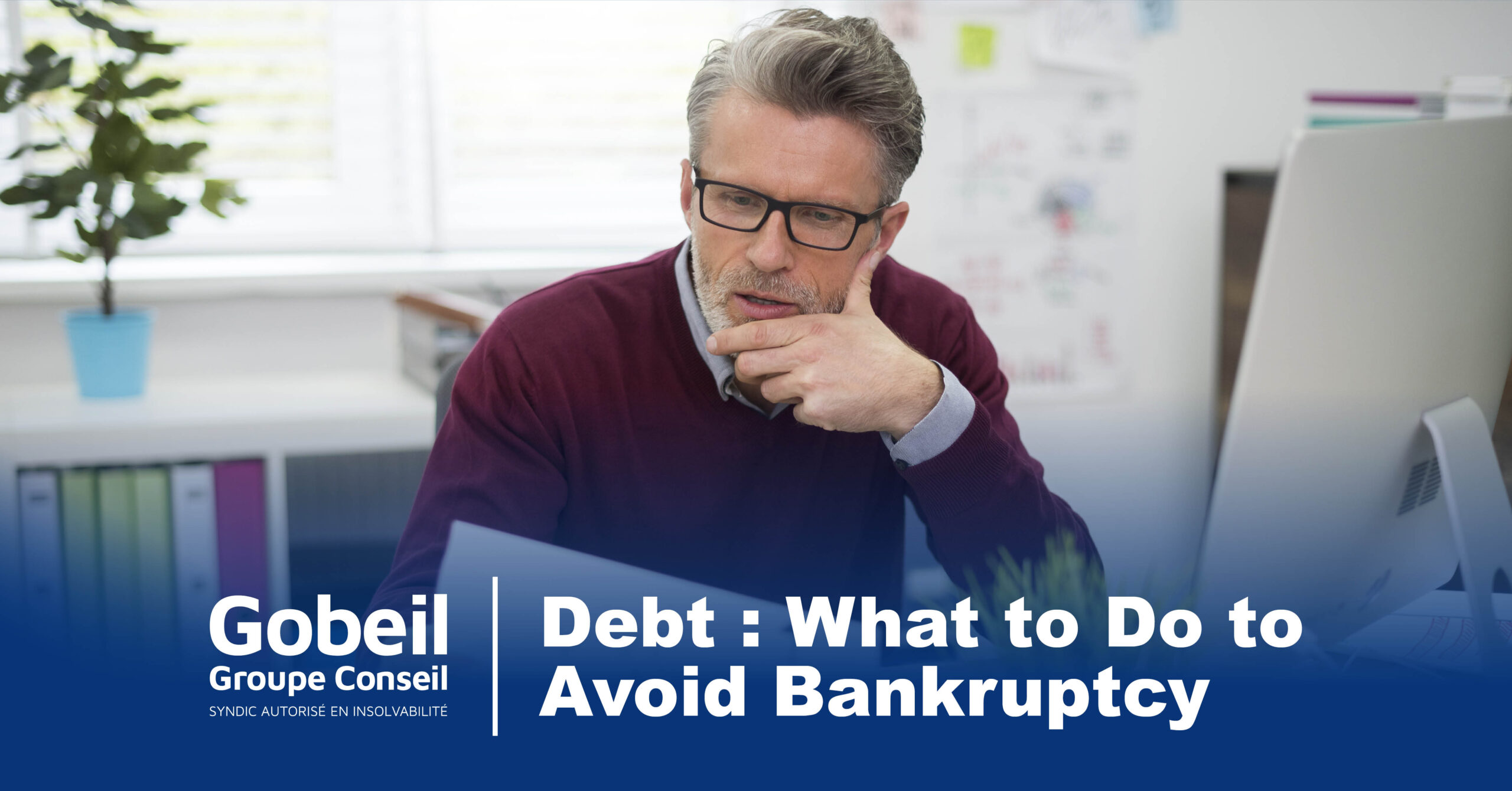
I have too much debt: what to do before it’s too late?
Over-indebtedness in Quebec is becoming increasingly common. The rising cost of living, high interest rates, job loss, or a separation can cause debts to pile up in just a few months.
If you recognize yourself in this situation, do not be discouraged! Solutions exist to regain control of your personal finances before considering bankruptcy.
You can obtain free, confidential, and no-obligation advice by reaching out to trusted professionals. Here is a practical guide explaining the first steps to take and which resources to contact before choosing a legal solution.
Recognizing the Signs of Out-of-Control Debt
Many people continue to juggle monthly payments, hoping the situation will improve. However, the sooner you seek help, the more varied and effective the debt solutions in Quebec will be.
Certain signs are unmistakable and reveal that your debt has become problematic:
You only pay the minimum on your credit cards, month after month;
You delay paying bills or receive calls and letters from creditors;
Your line of credit is maxed out;
You use one card to pay off another;
You feel constant money-related stress, to the point of avoiding opening your mail;
You borrow money to cover basic living expenses (groceries, gas, etc.).
These signs indicate that your debts are no longer decreasing, despite your efforts. This is not a personal failure: it is a financial situation that requires a concrete plan to overcome.
The key is to act quickly. The longer you wait, the more interest accumulates and the less flexibility you will have. By intervening early, you can likely avoid bankruptcy in Quebec through preventive solutions tailored to your situation.

Assessing the State of Your Finances
Before finding a solution to your debts in Quebec, you must first see your situation clearly. This is an essential but also liberating step, as putting your numbers on paper helps you understand where you truly stand.
1. List All Your Debts
List all your debts on a sheet or in a spreadsheet:
Credit cards
Personal loans and lines of credit
Car loans
Student loans
Back taxes
For each one, note the total amount owed, the interest rate, and the minimum monthly payment.
2. Identify Your Essential Expenses
Next, list your basic expenses: housing, food, transportation, insurance, healthcare, etc. Compare the total to your net income. You will quickly see if your expenses exceed your means and which ones you can reduce or eliminate.
3. Use Free Tools
Several local resources can help you build your budget at no cost:
ACEF (Associations coopératives d’économie familiale) offer workshops and individual consultations;
Free budget calculators are available online to estimate your debt ratios and repayment capacity;
Learn more online about debt consolidation in Quebec, which is an alternative to personal bankruptcy.
Even if you realize your debts are higher than you thought, do not panic: by having a clear picture, you are ready to take action.
Seeking Help Before the Crisis
When the situation becomes too heavy, you shouldn’t remain alone without acting. Talking about money problems can seem difficult, but it is the key to avoiding the spiral of over-indebtedness.
Community Resources
ACEFs, present in all regions of Quebec, offer neutral and non-judgmental support. Their advisors can not only help you create a realistic budget, but they can also encourage you and explain the different options available.
The Role of the Licensed Insolvency Trustee
If your debts exceed your repayment capacity, it is time to consult a Licensed Insolvency Trustee (LIT). Contrary to what many believe, the trustee is not there to push you toward bankruptcy. They are a professional regulated by the Government of Canada who acts to inform you and guide you toward an advantageous solution.
The trustee can evaluate your situation for free, explain legal solutions, and help you choose the one that best fits your profile. Seeking help never hurts—and even if you decide to manage on your own, you will have reliable information to make an informed decision.
Exploring Options Before Bankruptcy
Before considering bankruptcy, wait! There are several solutions to debt in Quebec that could allow you to regain control. Here are the most common:
Direct Negotiation with Creditors
You can contact your financial institutions to request a temporary adjustment: a lower interest rate, an extension of a loan term, or a payment holiday. While this offers a reprieve, it is often limited in time and depends on the goodwill of each creditor.
Debt Consolidation
Debt consolidation consists of grouping several debts into a single loan with a lower interest rate. This simplifies management and reduces monthly payments. However, this option is mainly for those who still have a good credit score and sufficient borrowing capacity.

The Consumer Proposal
If debt consolidation is not possible, the consumer proposal often becomes the best alternative to avoid bankruptcy in Quebec. This legal solution, offered only through a Licensed Insolvency Trustee, allows you to:
Reduce your debts by up to 70%;
Eliminate interest;
Make fixed monthly payments;
Protect your assets (house, car, RRSP).
The proposal is accepted if the majority of your creditors (by value) agree to it. Once accepted, it becomes a legal contract that freezes legal proceedings and stops collection calls.
Case Study: Sophie, 45, from Laval
To better understand how these solutions work, let’s look at Sophie, a 45-year-old resident of Laval. Sophie works full-time, but after a separation, her debts piled up: credit cards, a car loan, and unpaid taxes, totaling $40,000. Despite a good salary, she could no longer make the required monthly payments, and her credit score deteriorated.
She tried to get a bank consolidation loan, but it was refused due to her high debt ratio. Stressed and exhausted, she finally consulted a Licensed Insolvency Trustee. After a full analysis, they suggested a consumer proposal.
The result:
Her monthly payments were reduced by 50%;
There was no more interest to pay;
Collection calls stopped;
In 4 years, her debts were completely settled.
Sophie was able to keep her car and her job while regaining sleep and peace of mind.
FAQ
1. How do I know if I am over-indebted? You are likely over-indebted if:
You can no longer make payments on time;
You use credit for everyday expenses (food, rent, gas);
Your debts are growing faster than your ability to pay them back;
Collection agencies contact you regularly.
2. What is the difference between bankruptcy and a consumer proposal?
Personal Bankruptcy: A complete discharge of debts is possible in exchange for assets or monthly payments over 9 to 21 months or more. Your credit rating becomes R9.
Consumer Proposal: A legal solution that allows you to pay back only a portion of your debts over up to five years without losing your assets. It has a less severe impact on your credit (R7 rating).
3. Am I eligible for a consumer proposal? You may be eligible if you have over $1,000 in unsecured debt, your total debts (excluding your mortgage) do not exceed $250,000, and you have regular income to make payments.

Take Action!
If you feel overwhelmed by your debts, know that you are not alone. It is never too late to act. Over-indebtedness in Quebec affects thousands of people every year, and solutions exist to come out on top.
Start by evaluating your situation, talk to an advisor or a Licensed Insolvency Trustee, and above all, do not stay isolated. Consultations are free, confidential, and judgment-free.
Book an Appointment: It’s Free!
To learn more or to obtain a free consultation to evaluate your situation, consult our Licensed Insolvency Trustee. At Gobeil Groupe Conseil, we help hundreds of people every year regain their financial stability.
Book your appointment now! Our advisors serve the entire province.