Consumer Proposal or Bankruptcy: How to Make the Right Choice?
Are you feeling overwhelmed by your debt? You may have already searched Google for “consumer proposal or bankruptcy” or “debt solutions” in hopes of finding clear answers.
Rest assured: you are not alone in this situation. Every year, thousands of people—from Montreal to Quebec City and throughout the province—hesitate between these two options to regain financial stability.
The good news is that there is a way to get out of it with your head held high, without losing everything. One of the wisest—and often misunderstood—choices is the consumer proposal.
Why is this option, in many cases, a more humane and less damaging alternative to bankruptcy? That is what we are going to explore together.
What Is a Consumer Proposal?
In short, it is a legal way of saying to your creditors: “Look, I can’t repay everything, but here is the amount I can give you.” It is simple, humane, and above all, it allows you to avoid bankruptcy.
Your debts are consolidated, and you repay only a portion of the total amount, interest-free, in reduced monthly payments (for up to 5 years). In return, your creditors stop harassing you. No more interest, no more calls. And you are not forced to sell your house or your car to make it happen.
It is not a magic wand, but it is a real solution when you don’t want to lose everything or live with the consequences of a bankruptcy for years.
To be eligible for a consumer proposal, you must:
Be an individual living in Canada or owning property in Canada.
Have debts (excluding your mortgage) that do not exceed $250,000, and these debts must be higher than the total value of your property and other assets.
Be in a situation where you can no longer make your minimum monthly payments (Hydro, credit cards, student loans, auto loans, etc.).
Meet with a Licensed Insolvency Trustee, who will analyze your situation and prepare the proposal with you.
In summary: if you are eligible, the consumer proposal can be an advantageous option to resolve your financial problems. This solution to over-indebtedness is offered by the Government of Canada, and to access it, you must go through a Licensed Insolvency Trustee. They are not an ordinary financial advisor: they are the only person legally recognized to manage this type of file.

Consumer Proposal vs. Bankruptcy: Understanding the Differences
Before making a choice, it is essential to understand what each option implies. Here is a simple comparison table to help you see more clearly:
| CRITERIA | CONSUMER PROPOSAL | PERSONAL BANKRUPTCY |
| Debt Amount | Reduced (negotiated with creditors) | Possibility of full discharge |
| Monthly Payment | Reduced, fixed, interest-free, and realistic based on your ability to pay | Varies based on your monthly income |
| Asset Retention | Yes (house, car, RRSP, etc.) | No guarantee (risk of losing certain assets) |
| Credit Impact | R7 rating for 3 years after completion (or 6 years after filing) | R9 rating (the most severe on a credit report) |
| Duration | 5 years maximum (sometimes less) | Generally 9 to 21 months (can go up to 36 months) |
| Creditor Participation | Yes, they must accept the proposal | No, your bankruptcy is imposed on them |
| Financial Rebuilding | Faster and better structured | More difficult, longer restart |
What Does Filing for Bankruptcy Mean?
Personal bankruptcy is a legal procedure that allows you to erase unsecured debts, such as credit cards or personal loans. However, this drastic solution comes at a high price:
Possible loss of assets: Your home, vehicle, investments, or even certain valuable items may be seized to repay creditors.
Impact on credit report: A bankruptcy remains on your record for 6 to 7 years after discharge, or 14 years in the case of a repeat bankruptcy. It is the most negative rating possible (R9).
Psychological consequences: For many, filing for bankruptcy is perceived as an admission of failure. This can affect self-esteem and cause significant stress.
Obligation to declare income: Every month, you must provide your income statements to the trustee. If your income increases, you may have to pay a portion of it.
In short, bankruptcy may seem like a quick fix, but it can lead to heavy long-term consequences.
Why Is the Consumer Proposal Often a Better Alternative?
If you are eligible, the consumer proposal is often the most advantageous option to avoid bankruptcy. Here is why:
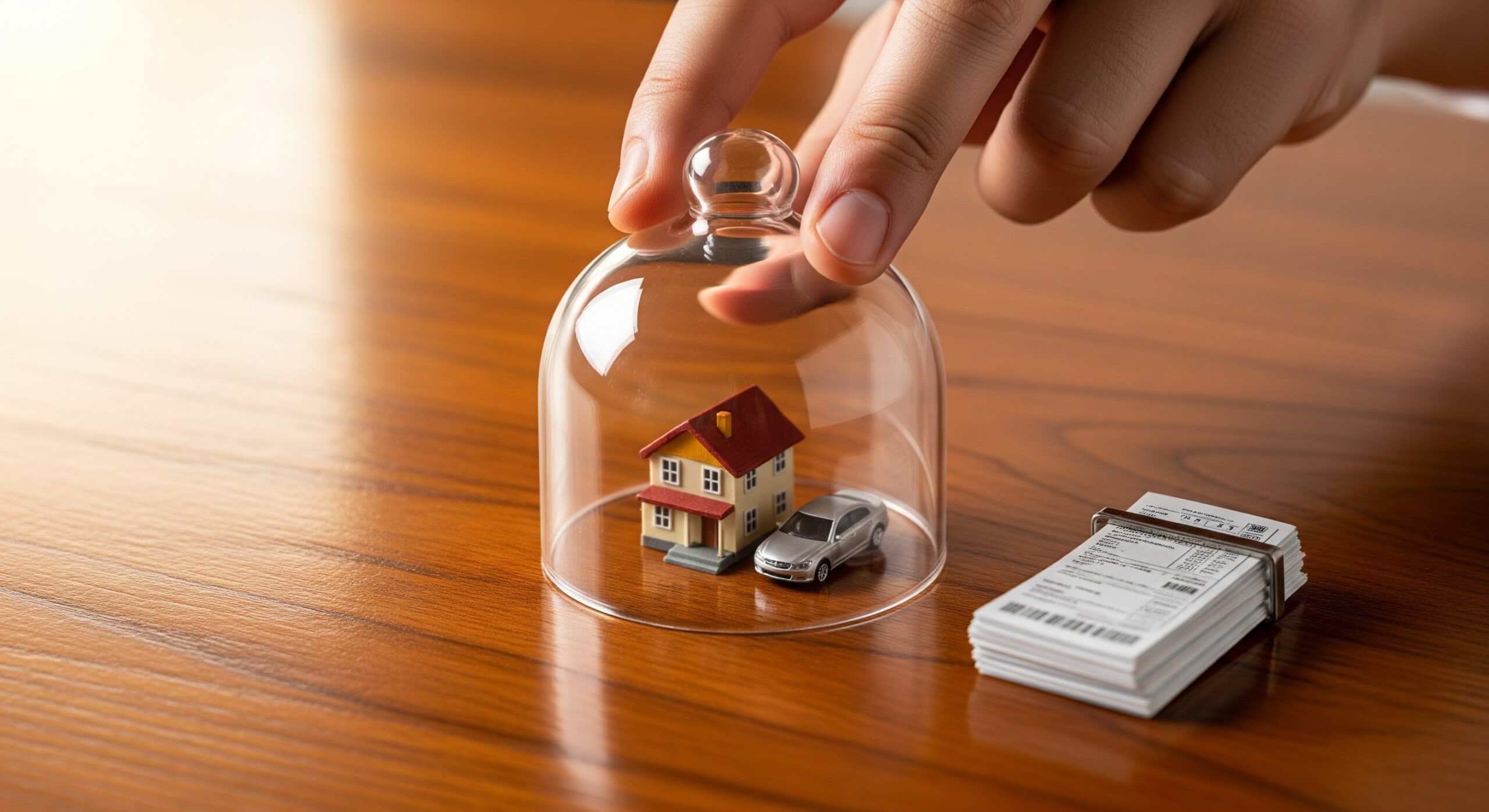
You keep your assets: Unlike bankruptcy, you do not lose your assets. Your house, your car, or your RRSPs are protected, as long as you continue to make your regular payments.
Your credit is affected, but not destroyed: Yes, the consumer proposal leaves a mark on your credit report (R7). But it is much less severe than a bankruptcy (R9). Most importantly, you can start rebuilding your credit as soon as you begin payments.
You repay according to your means: The amount is negotiated with your creditors and approved by a trustee. You pay a fixed amount each month, often much lower than what you owed. This allows you to breathe and plan your budget.
You are guided by a professional: The proposal is managed by a Licensed Insolvency Trustee, such as Gobeil Groupe Conseil. This professional guides you, protects you against creditors, and accompanies you throughout the duration of the plan.
Less stigma: Choosing the proposal means taking responsibility for your debts. It is not running away; it is finding a respectful and responsible solution.
Real-Life Example: Marie’s Case
Take the example of Marie, a 36-year-old single mother earning $3,200 a month. With $42,000 in debt across several credit cards and a personal loan, she could no longer make ends meet.
Marie considered bankruptcy. But she insisted on keeping her car, which was essential for getting to work and taking her children to school. She consulted a trustee at Gobeil Groupe Conseil, who proposed a solution: a consumer proposal.
The result? She now pays $250 a month for 5 years. She kept her car, sleeps better, and finally sees the light at the end of the tunnel.

In Conclusion: Bankruptcy as a Last Resort
Filing for bankruptcy is not a shame, but it is not always necessary. In many cases, the consumer proposal is the best solution for managing debt: more humane, gentler, and above all, more constructive.
You avoid the seizure of your assets, protect your financial future, and regain control of your life without starting over from scratch.
Still Hesitating?
You don’t have to decide alone. At Gobeil Groupe Conseil, we know how difficult these decisions are. That is why we offer free consultations, with no pressure or judgment.
Discuss with our advisor for free to find out if you are eligible for a consumer proposal. Together, we will find the best solution for you.
Book your appointment now! Our advisors serve the entire province. Gobeil Groupe Conseil, Licensed Insolvency Trustee, is proud to help hundreds of people regain their peace of mind every year.