
Unable to Pay Your Taxes in Quebec: What Solutions Exist?
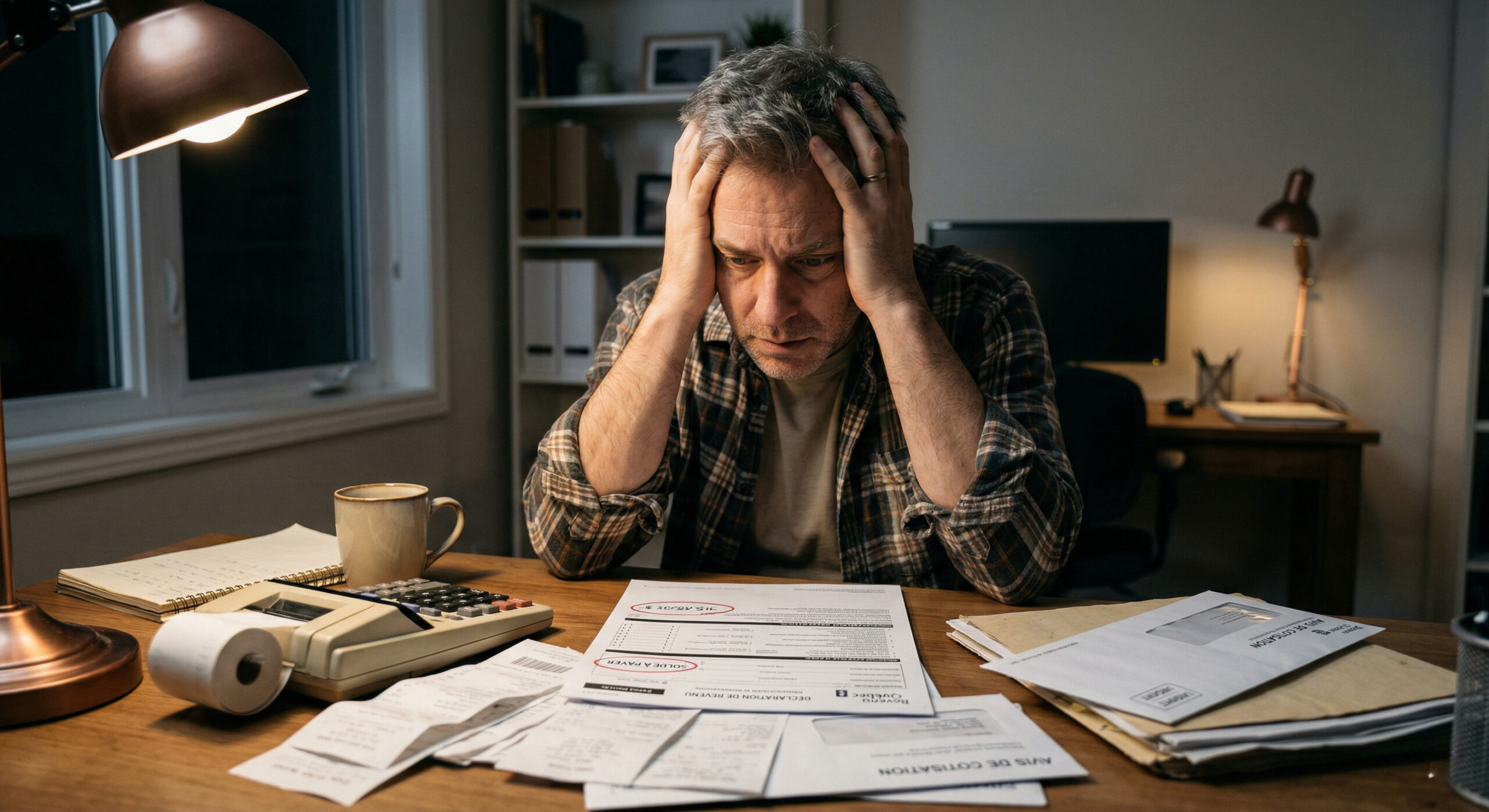
Every year, a large number of Quebecers file their income tax returns and discover an unpleasant surprise: a significant tax balance to pay.
In some cases, this amount can reach several thousand dollars. For many people, it then becomes impossible to pay this outstanding balance immediately (or in full).
This situation is more common than one might think. It often happens to self-employed workers, when adding supplementary income, when changing jobs, or when losing certain deductions.
When a significant tax debt is due, ignoring the situation can lead to interest, penalties, and collection measures. The good news is that several solutions exist.
Depending on your financial situation, you could:
- enter into a payment agreement
- reorganize your debts
- use a legal procedure such as a consumer proposal
- or, in certain cases, consider bankruptcy
Here is what you need to know if you have a debt to the ARC or to Revenu Québec and you cannot pay it.
What Happens If You Don’t Pay Your Tax Debt?
When you file your return and a balance is due, this amount officially becomes a tax debt in Quebec.
If you do not pay this amount before the deadline, certain consequences can occur.
- Interest begins to accumulate
As soon as the payment deadline is missed, interest is applied to the unpaid balance. This interest is calculated daily and can quickly increase the debt. The longer the debt remains unpaid, the more difficult it becomes to repay.
- Penalties may be added
If the return is filed late and an amount is due, penalties may also be added, in addition to interest, increasing the total amount of the debt.
- Collection measures may be used
When the debt remains unpaid for a long period, tax authorities can initiate collection efforts. For example, they may:
- seize a future tax refund
- seize certain government benefits
- perform a wage garnishment
- freeze or seize bank accounts
- register a legal hypothec (mortgage) on certain assets
This is why it is always better to seek a solution to a Revenu Québec or CRA debt as soon as possible.
Can You Enter into a Payment Agreement with the CRA or Revenu Québec?
Yes. In many cases, it is possible to conclude a payment agreement. This option allows you to pay your taxes later, by making monthly installments.
How does a payment agreement work?
A payment agreement consists of gradually repaying the tax debt over a determined period. You will generally need to:
- propose a monthly amount
- demonstrate your ability to pay
- respect the scheduled payments
Tax authorities analyze your situation before accepting the agreement.
The limits of a payment plan
Even with an agreement, certain elements remain important. For example, interest generally continues to accumulate on the debt.
Furthermore, tax authorities can refuse the agreement if they deem your ability to pay to be insufficient.
In some cases, the required payments may be too high for your budget.
If the tax debt is added to other significant debts (credit cards, personal loans, lines of credit), a simple payment agreement may not be enough.
Can Tax Debt be Included in a Consumer Proposal?
Yes. A consumer proposal can include certain tax debts.
It is a legal solution provided by the Bankruptcy and Insolvency Act to help people who can no longer repay all their debts.
What is a consumer proposal?
A consumer proposal is an official agreement with your creditors. It generally allows you to:
- reduce the total amount of the debt
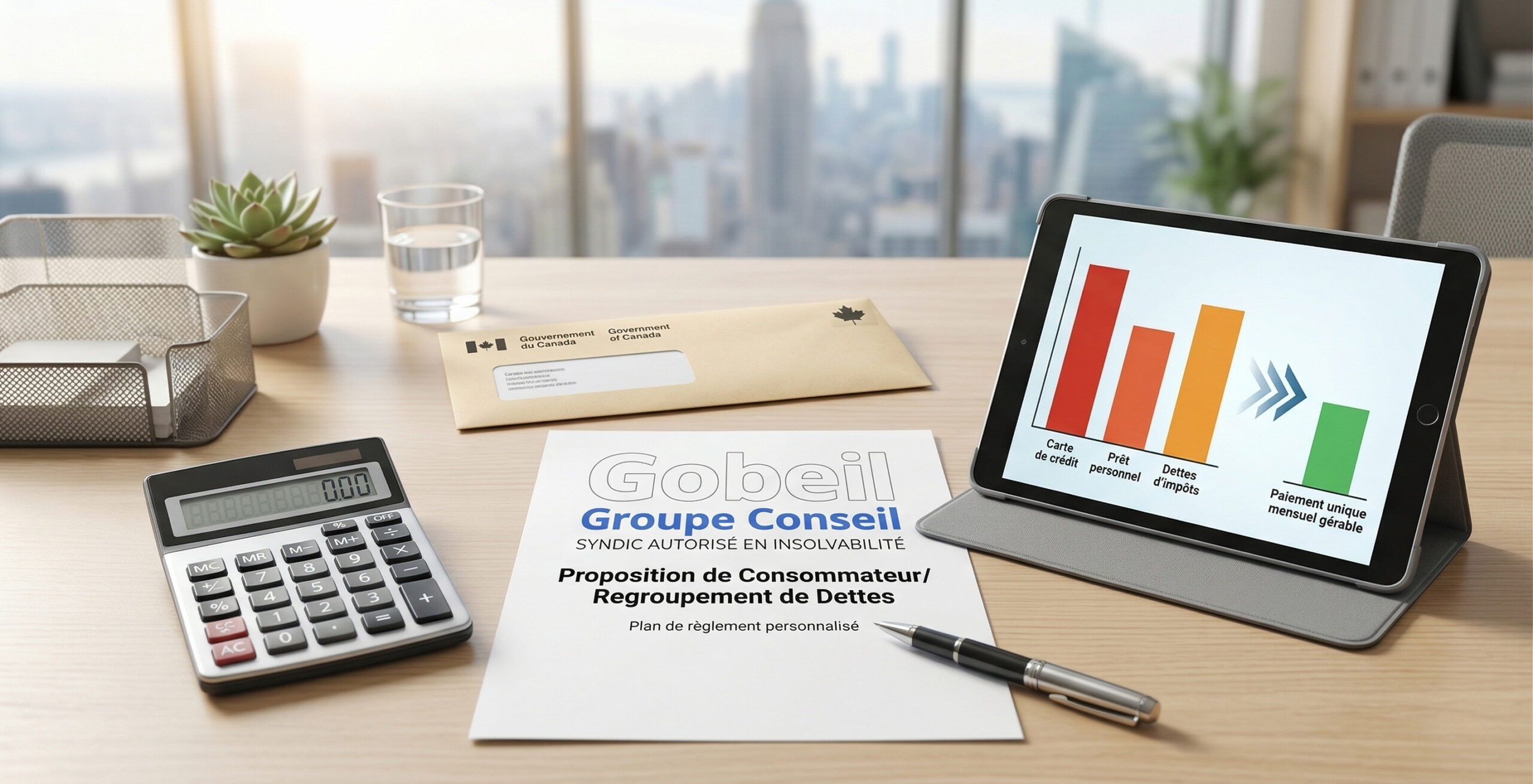
- consolidate debts into a single monthly payment
- stop interest accrual
- put an end to collection measures
This procedure must be administered by a Licensed Insolvency Trustee.
Tax debts can be included
Contrary to what many people believe, tax debts can often be included in a consumer proposal. For example:
- a debt to the CRA
- a debt to Revenu Québec
- accumulated penalties and interest
The proposal is then submitted to the creditors, including the tax authorities. If the majority of creditors accept the agreement, it becomes legally binding for everyone.
For example, a person could have:
- $15,000 in credit card debts
- $10,000 in debts to the CRA or Revenu Québec
Instead of repaying $25,000 with interest, the proposal could allow paying only a portion of this amount (in payments over 5 years, without interest).
Every situation is different, but the consumer proposal can represent an effective solution to a tax debt in Quebec.
When Can Bankruptcy Be Considered?
Personal bankruptcy is generally considered a last resort solution.
However, it can be appropriate in certain situations. For example:
- when debts are very high
- when income is insufficient to repay the debts
- when other solutions do not work
Bankruptcy allows you to be released from most debts, including certain tax debts.
What you need to know
Bankruptcy has certain important consequences. It can notably:
- affect the credit file
- entail certain financial obligations
- require follow-up with a trustee
However, for some people, it represents the fastest solution to get out of debt and start over on a new financial footing.
A Licensed Trustee can analyze your situation and determine if this solution is appropriate.
When to Consult a Licensed Trustee?
When you realize it is impossible to pay your taxes in Quebec, it can be useful to consult a professional.
A Licensed Insolvency Trustee is a specialist recognized by the government to help people in financial difficulty.
During a consultation, they can:
- analyze your complete financial situation
- evaluate your debts, including tax debts
- explain the available solutions to you
- help you choose the most suitable option
This analysis often allows for the discovery of solutions that one had not thought of.
In some cases, a simple payment agreement may suffice.
In other situations, a consumer proposal can significantly reduce the debt.
Don’t Face Tax Debt Alone
Discovering a significant tax debt in Quebec can be stressful. Many people feel there are no solutions.
However, several options can be considered depending on your financial situation.
Acting quickly often helps prevent the debt from increasing due to interest and penalties.
Free Consultation with a Licensed Trustee
If you have a debt to the CRA or Revenu Québec and you don’t know what to do, it may be helpful to seek advice.
A Licensed Insolvency Trustee can analyze your situation and explain the possible solutions.
A free consultation allows you to:
- understand your options
- evaluate the available legal solutions
- find a strategy adapted to your budget
Making an appointment for a consultation can be the first step to regaining control of your financial situation.
Book Your Free Consultation!
To learn more about the consumer proposal and other available solutions, book a free consultation now (by phone, video call, or in person).
At GOBEIL SYNDIC, we help you quickly get out of debt and start over on a good footing.
Do not hesitate to contact us at 514-839-013, with no obligation on your part. We serve all cities in the province.