

Tax Refunds and Debt: What Happens if You File a Consumer Proposal?
Tax season can be particularly stressful, especially if you are in debt or considering a consumer proposal.
Why Does Tax Season Worry People in Debt?
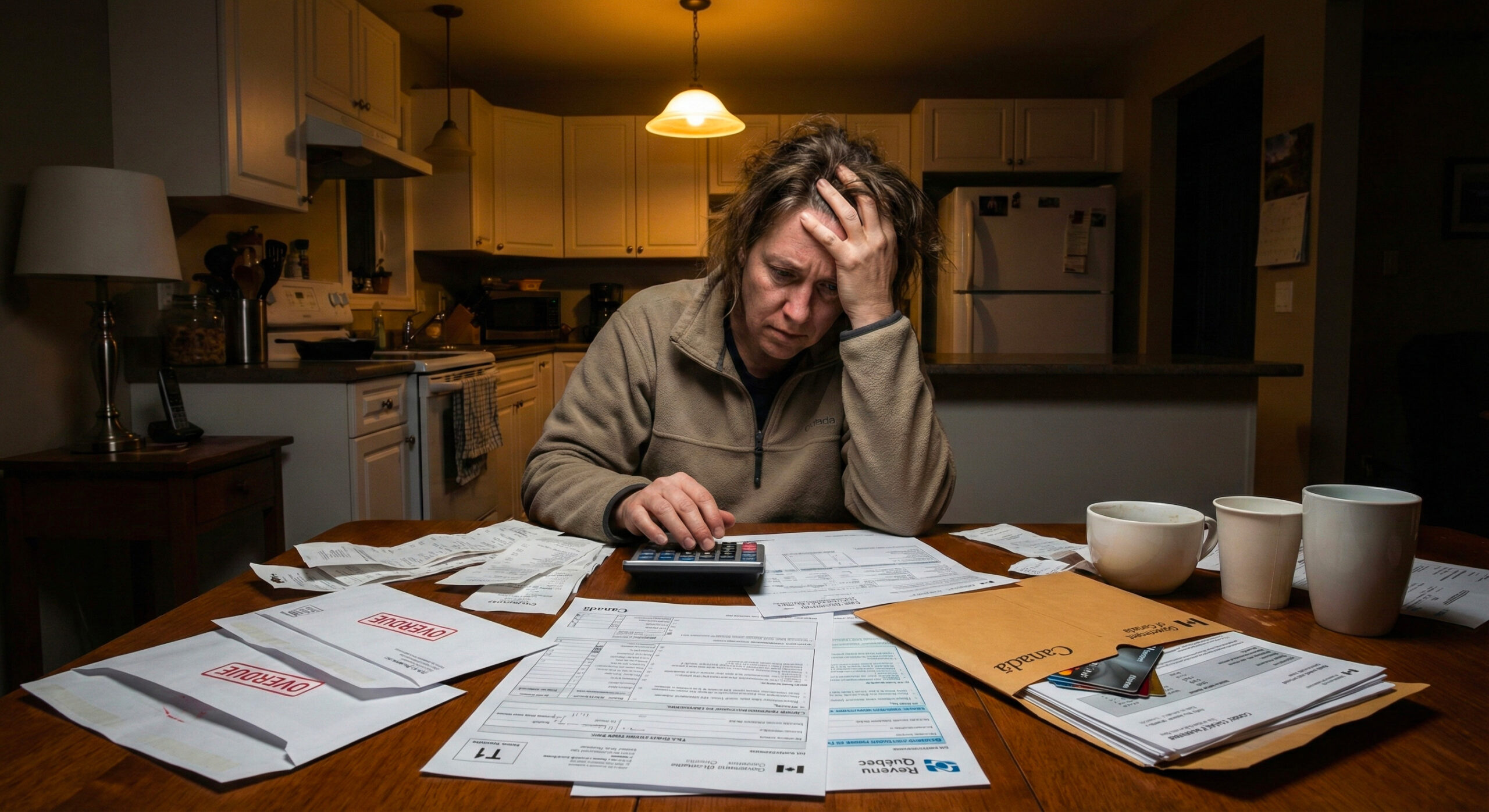
When you are in debt, tax time can become a real headache. There are several reasons why anxiety increases.
- Fear of Losing the Refund: For those in a difficult financial situation, a tax refund can represent a small sense of relief. It is often a welcome help to reduce some of the pressure. The idea of seeing this money disappear to cover debts is therefore a significant source of stress.
- Misinformation Found Online : With everything available online, it is not uncommon to come across inaccurate information. For example, some mistakenly believe that all their debts (whether tax-related or private) can affect their tax refund. These misconceptions add even more anxiety.
- Confusion Between Private and Tax Debts : Some people do not know if the balance owed to the federal and provincial governments can be included in a proposal or if it must still be paid separately.
What Happens to a Tax Refund When You Are in Debt?
- Difference Between Ordinary Debt and Tax Debt :Many people mix up tax debts (taxes owed to the CRA or Revenu Québec) and private debts (such as credit cards or personal loans). However, only tax debts can cause a tax refund to be seized.
- The Role of the CRA and Revenu Québec: The Canada Revenue Agency (CRA) and Revenu Québec have legal powers that allow them to seize your tax refund to offset an unpaid tax debt. They can thus recover taxes owed, including outstanding interest and penalties. This power is exclusive to tax debts and does not extend to private debts.
- Before Any Legal Proceedings: You can start a consumer proposal process without being afraid that your tax refund will be seized. Keeping this amount aside is a very good idea to help you make your monthly payments.
Tax Refunds and Consumer Proposals
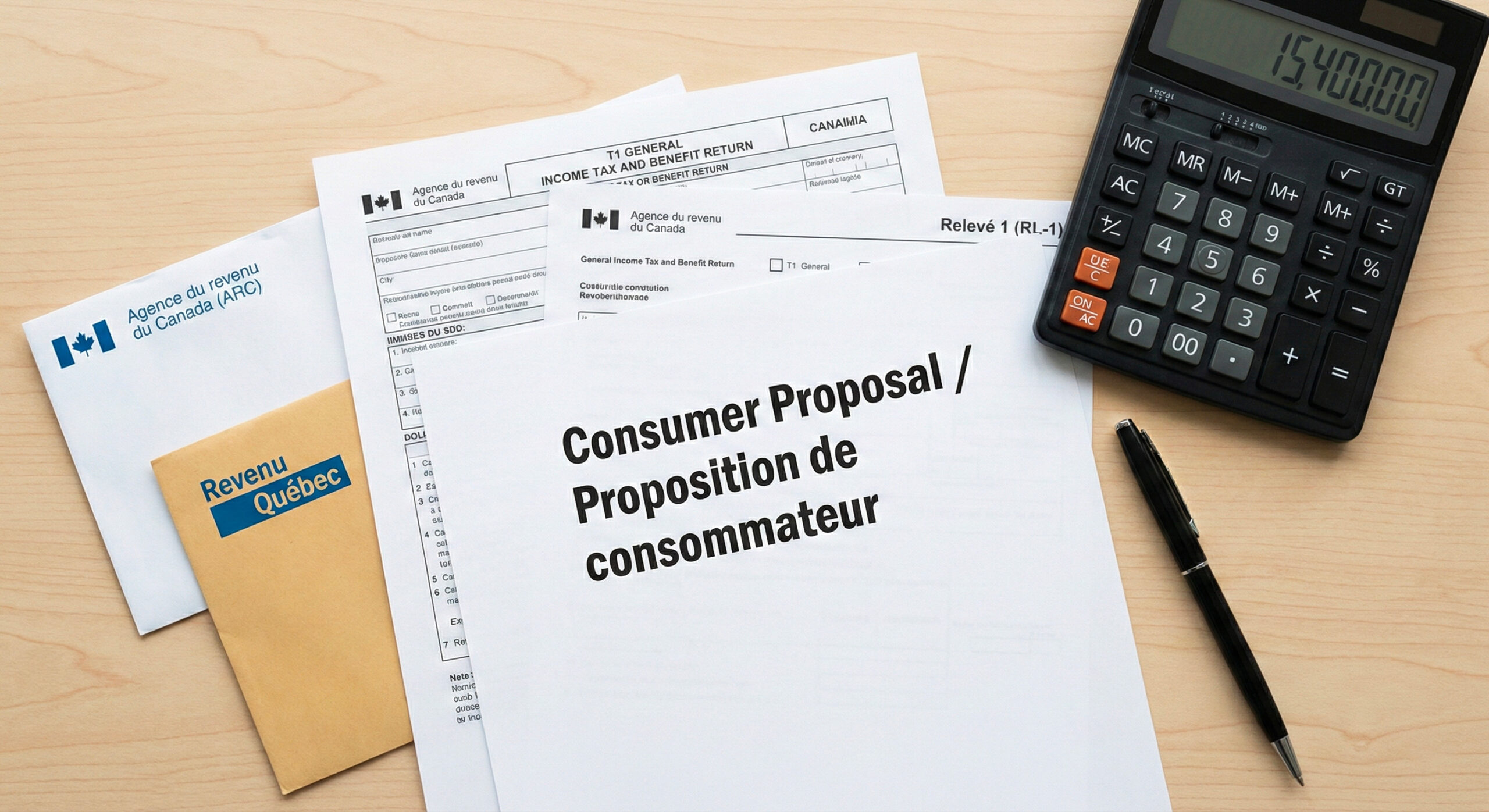
A consumer proposal is a legal process (administered by a trustee) through which you propose to repay a portion of your debts over a period of up to five years, interest-free. However, it does not have the same impact on all debts.
- What is Included or Not: If you are currently filing a consumer proposal, private debts are included (credit cards, lines of credit, auto loans, etc.), as well as tax debts. It is important to understand that although the proposal covers your tax debts, it does not protect your previous tax refunds in the event of outstanding tax arrears.
- Cases Where the Refund May Be Affected: If you are in the consumer proposal process and have unpaid tax debts, your tax refund for previous years may be seized by the CRA or Revenu Québec to settle those debts. Private creditors, however, cannot seize your tax refund within the framework of a consumer proposal.
- Importance of Timing When Filing a Proposal: The moment you file a consumer proposal can have a direct impact on your tax refund. It is important to consult a Licensed Insolvency Trustee before filing your income tax return. They can advise you on the best timing to file your proposal based on your tax situation.
Frequent Errors to Avoid During Tax Season
The approach of tax season is often a time prone to errors that can harm your financial management. Here are some common mistakes to avoid:
- Waiting Too Long: Failing to consult a trustee before filing your taxes can lead to complications. It is essential to plan this consultation before submitting your tax returns. By consulting a trustee too late, you could miss opportunities to protect your refund (for example, if it is deposited into your bank account at the start of a proposal while you have an overdraft or loan at that same bank) or plan your tax debts correctly.
- Filing Taxes Without Professional Advice: Attempting to manage your tax situation alone can lead to mistakes. A trustee can provide advice on the best way to manage both your tax and private debts. Filing your taxes without consulting a professional can lead to errors that could cost you more in the long run.
- Using the Refund to Pay a Random Debt: It may be tempting to use your tax refund to settle a specific debt, but this might not be the best option. If you have already signed a payment agreement with your creditors (consumer proposal), you must use your tax refund strategically to maximize your financial benefits and respect the legal agreement.
Why Consult a Trustee Before Filing Your Taxes?
Consulting a Licensed Insolvency Trustee before filing your taxes can offer several advantages:
- Comprehensive Situational Analysis: A trustee can examine your financial situation as a whole, including your tax and private debts. This will allow you to make informed decisions regarding your tax refunds and debt management.
- Legal Protection: A trustee offers you legal protection by negotiating with your creditors and guiding you through the consumer proposal options. They will help you protect your assets and your tax refund while complying with the law.
- No Obligation After Consultation: A consultation with a trustee does not commit you to anything. You can get clear advice on your situation and then decide whether or not you wish to proceed with a consumer proposal.
Don’t Wait to Contact Us!
If you are in debt and about to file your taxes, consulting a Licensed Insolvency Trustee can make all the difference.
This professional can guide you to maximize your chances of keeping your tax refund and protecting your assets.
Don’t wait! Contact our Licensed Insolvency Trustee now for a free and confidential consultation to better understand your tax and financial situation.
To learn more about consumer proposals and their impact on your tax return, book a free consultation now (by phone, video call, or in person).
At GOBEIL SYNDIC, we have helped thousands of people get out of debt quickly. We are at your service!
Do not hesitate to contact us, with no commitment on your part. We serve all cities in the province.

FAQ
Will I lose my tax refund with a consumer proposal?
Tax refunds when one is in debt can raise many questions. However, it all depends on the type of debt you have.
If you owe money to the CRA or Revenu Québec, your tax refund may be seized to cover your tax debts for the current year only. Credit card debt and private loans will not directly affect your refund.
Can I file my taxes if I have a consumer proposal?
Yes, you can file your taxes even if you have signed a consumer proposal, but it is advisable to consult a trustee to understand how this might affect your refund.
Can the CRA seize my refund?
The CRA can seize your refund if you owe money to that institution, but only for pre-proposal tax debts. Private creditors cannot seize your refund within a consumer proposal.
When is the best time to consult a trustee?
Consult a trustee before filing your taxes if you have significant debt or if you are considering a consumer proposal. This will allow you to understand how to protect your refunds.